The Untold History Of Chopsticks
For some, they are easy to master, but for others a challenge.
A commonly known fact is that chopsticks originated in Asia but do you know where and why?
These humble alternatives to forks and knives have been around for generations, but how did they become a staple utensil in Asia?
In this article, we will explore the unexpected and untold history of the chopstick.
The first evidence of chopsticks.
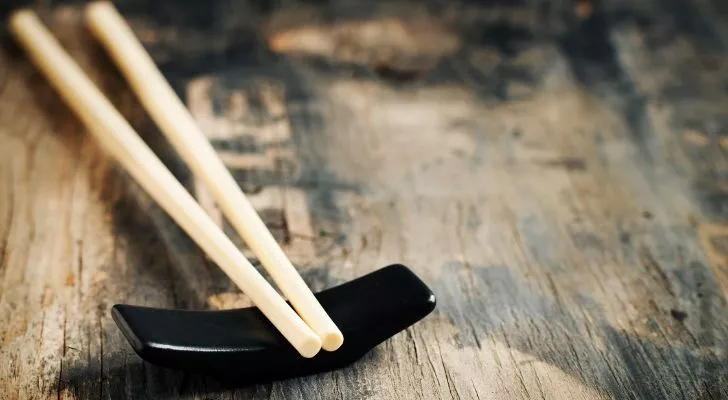
Chopsticks were invented over 5,000 years ago in China and had a humble beginning by being used as cooking utensils.
The earliest form of chopstick was thought to have been used in China and was made of wood.
It is thought that the original chopsticks would have been slender twigs used to pick out food from a cooking pot.
But as creative cooking developed and fried became even more popular, this changed the material of chopsticks.
Evidence of this was found in the ruins of Yin in the Henan province.
Known famously as the location of discovering the earliest examples of Chinese writing and also home to the first known metal chopsticks.
These were bronze sets of chopsticks found in tombs at the site.
The benefit of using cast metal chopsticks was the ability to reach deep into boiling pots of water and oil.
The use of chopsticks.
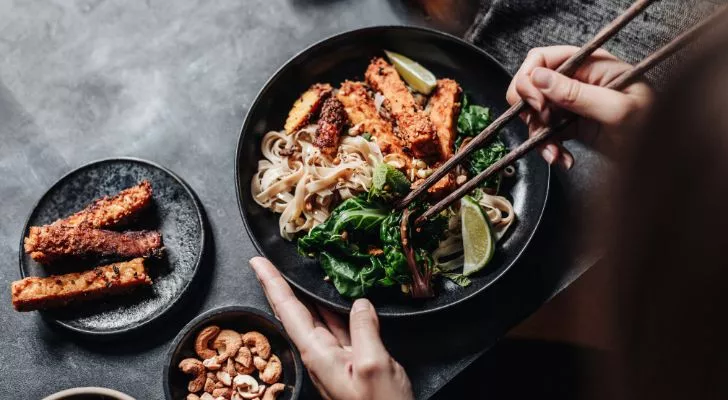
Around 400 A.D, people began eating with chopsticks.
There were food and fuel shortages in China due to a population boom, so chefs had to get creative with cooking.
Reducing the availability of wood for fires forced chefs to change how they cooked. So, chefs started to experiment by dicing food into tiny pieces.
They knew that the smaller the food chunks, the quicker they would cook.
This was a clever way of conserving firewood and resources while still being able to eat.
Bitesize food meant there was no need for knives, eventually making them obsolete.
This is where the idea of using chopsticks as eating utensils was born.
The evolution of chopsticks.
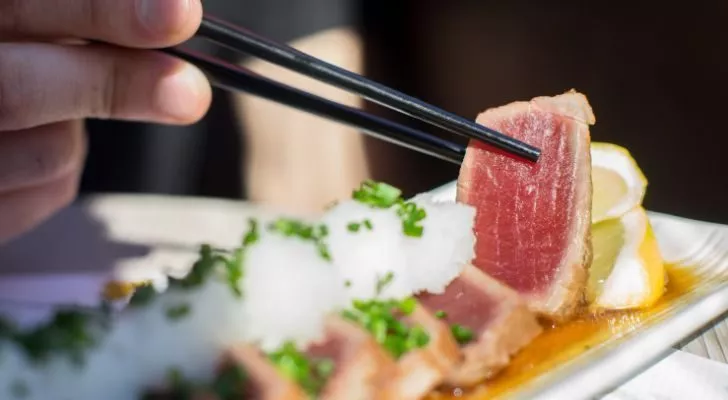
Different cultures have adopted varying features to their chopsticks.
It is thought in China that chopsticks became popular around the time of Confucius and his teachings.
At the time, his teachings didn’t allow knives at the table as they were a reminder of slaughter and violence.
This is thought to have influenced Chinese chopsticks to be blunt in design.
By 500 AD, chopsticks were introduced in other parts of Asia, such as Japan, Vietnam, and Korea.
Each country put its spin on the simple chopstick design.
For example, in Japan, chopsticks were only used for religious ceremonies.
They were made with a single piece of bamboo split in two and were still joined at the top, resembling tweezers. Also, men’s chopsticks were an inch longer than women’s.
Other countries tried alternative materials such as jade, ivory, brass, and coral.
Chopstick myths.
In the Chinese dynastic era, silver chopsticks were used to detect poison.
The theory was that if your food had been poisoned, your chopsticks would turn black. However, this wasn’t always a reliable method.
Silver will not change color if it touches cyanide or arsenic, but it can react when exposed to hydrogen sulfide found in garlic, onion, and rotten eggs.
Over the centuries, chopsticks have been associated with many other myths.
Another example is that some Asian cultures believe you will miss a plane or boat if you use an uneven pair of chopsticks.
Another example from Korean culture is that the closer you hold your chopsticks to the tip, the longer you will remain unmarried.


No comments:
Post a Comment