6.Precious Facts About Pennsylvania
It has a population of 12.78 million people (as of 2021), making it the fifth most populous state.
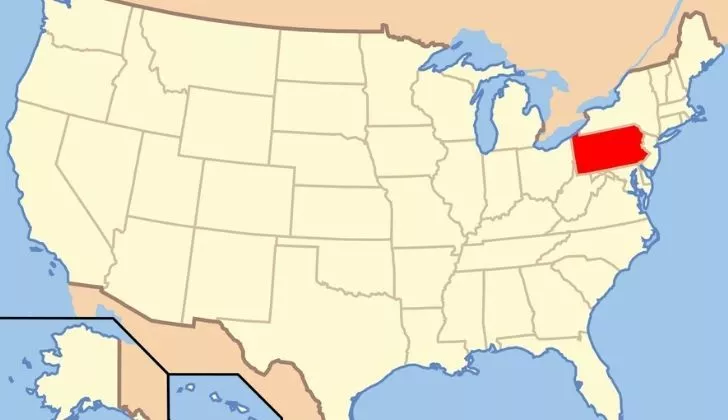
Pennsylvania is bordered by the states of New Jersey, Maryland, Delaware, West Virginia, Ohio, and New York.
With a total of 46,055 square miles (119,283 square kilometers) of land and water, it is the 33rd largest state.
The capital of Pennsylvania is Harrisburg, which is located just southeast of the center of the state.
That’s enough fast facts about the Keystone State for now, though; we’re here to learn the more interesting facts!
People might have been living in Pennsylvania for as many as 19,000 years!
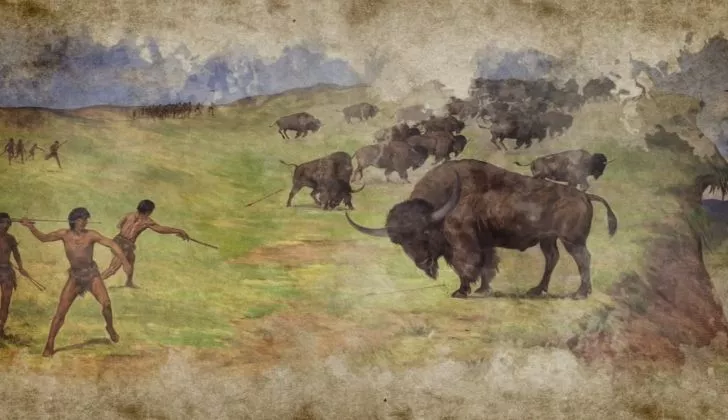
It is believed that the Americas were populated by a group of people referred to as the Paleo-Indians.
They traveled by land from the far east of modern-day Russia across the Bering Strait into modern-day Alaska sometime around 15-13,000 BC.
This was possible during this period as the Bering Strait was actually a land bridge during the late stages of the last ice age.
An archaeological site called the Meadowcroft Shelter, located just 27 miles (43 kilometers) away from Pittsburgh, holds items that indicate that people have been living in the region for much longer than commonly believed.
Spear tips and knives recovered from the site have been radiocarbon dated to be as old as 16,000, if not 19,000 years old.
The style in which the tools have been created is also considerably different from tools created by later civilizations.
There were a number of Native American tribes living in Pennsylvania when Europeans arrived.
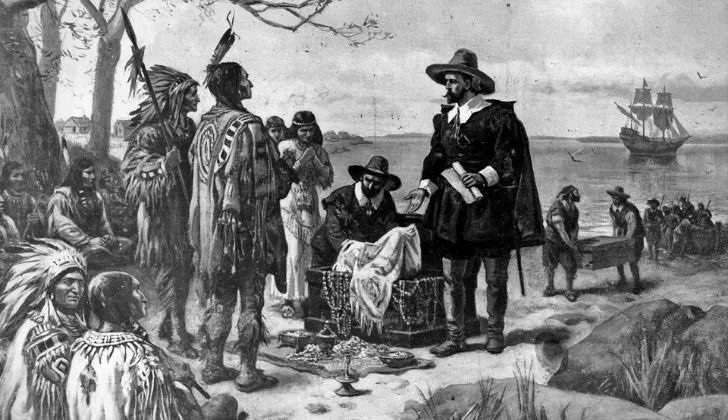
When European explorers first made contact with the Native Americans of modern-day Pennsylvania, they soon discovered that the tribes were generally divided into two distinct language groups.
Despite this, each tribe had its own strikingly different cultures and practices.
There were the Iroquoian-speaking tribes, which included the Susquehannocks and the many tribes under the banner of the Iroquoian Confederacy.
Other tribes, such as the Lenape and Shawnee, spoke varieties of the Algonquian language.
This list is not exclusive, as there were many more tribes living in the region, especially when we take into account the fact that many tribes disappeared without a trace when European diseases ravaged the land.
The first Europeans to explore Pennsylvania were British.
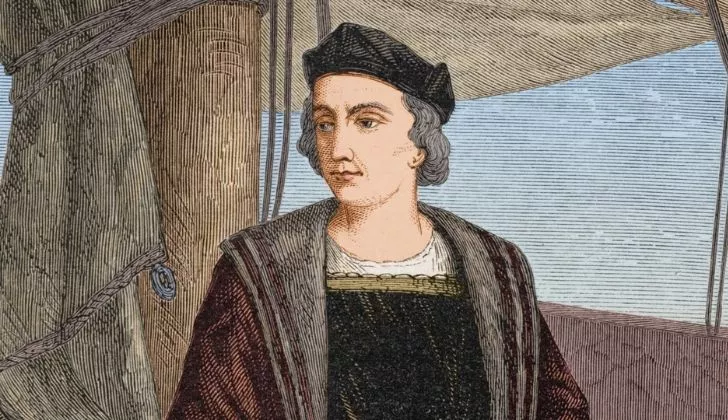
Well, as far as we can be sure, anyway. Exploration of the Americas kicked off in 1492 after Christopher Columbus, in service of Spanish monarchs, circumnavigated the world.
In 1497 John Cabot, an Italian in the service of the English Crown, became the first European to actually explore the coastline of North America.
Even the French passed by, mapping parts of Pennsylvania from a distance in 1524.
As far as records show, the first European to actually set foot in the region was the English explorer John Smith in 1608.
The first Europeans to colonize parts of Pennsylvania were actually Swedish.

Back in the 17th Century, Sweden was also a major naval power, and they too, attempted to stake their claim in North America.
In 1638 the colony of New Sweden was founded on the banks of the Delaware River at the site of modern-day Wilmington, Delaware.
Later in 1643, the governor of New Sweden established the colony’s capital on Tinicum Island within the bounds of modern-day Pennsylvania, making it the first European settlement in Pennsylvania.
The Pennsylvania Colony was founded as a place of religious freedom.
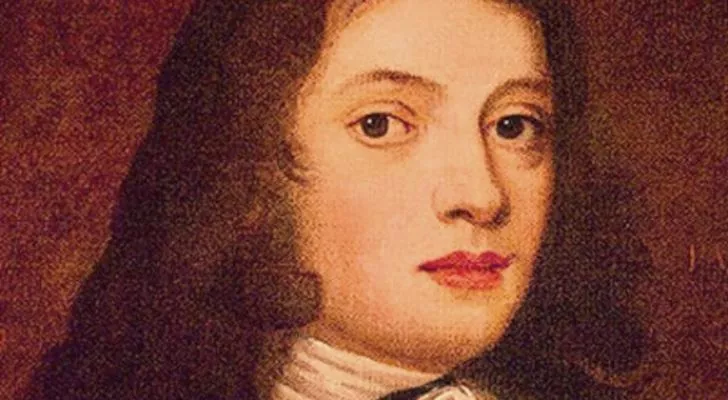
In 1681 much of today’s state of Pennsylvania was granted to William Penn by King Charles II of England.
William Penn was the son of a famous admiral and an early member of the Society of Friends (or Quakers), a new and persecuted Christian sect.
The Pennsylvania Colony was named by King Charles after William Penn’s father.
Written into the colony’s constitution since its founding were laws and charters which allowed freedom of religion for those who chose to live in Pennsylvania, provided they were Christian, of course.
As a result, many Amish and Mennonite settlers first came to North America via Pennsylvania.
Pennsylvania was the second state to join the United States of America.
The Pennsylvania Colony, for the most part, shared the sentiments of the other North American British colonies in the build-up to the American Revolution.
People from all backgrounds and classes were tired of unfair taxation without any form of representation.
When the revolution began, the people of Pennsylvania stood ready.
Much of the greatest battles of the revolution were fought within Pennsylvania, as it was seen to be a key to victory.
The United States Constitution was drafted in 1787 following Britain’s defeat.
The first former colony to ratify the constitution was Delaware, with Pennsylvania ratifying it next on December 12, 1787.


No comments:
Post a Comment